Technology. Fuel. Demand. Policy. Decarbonization requires all four.
Technology reaches scale when the market can adopt it. Cespira™ works with fuel providers, distributors, infrastructure investors, policymakers and regulators to close the loop between HPDI™ availability, fleet demand and BioLNG supply, building demand certainty, infrastructure utilization and credible lifecycle evidence needed to scale adoption.

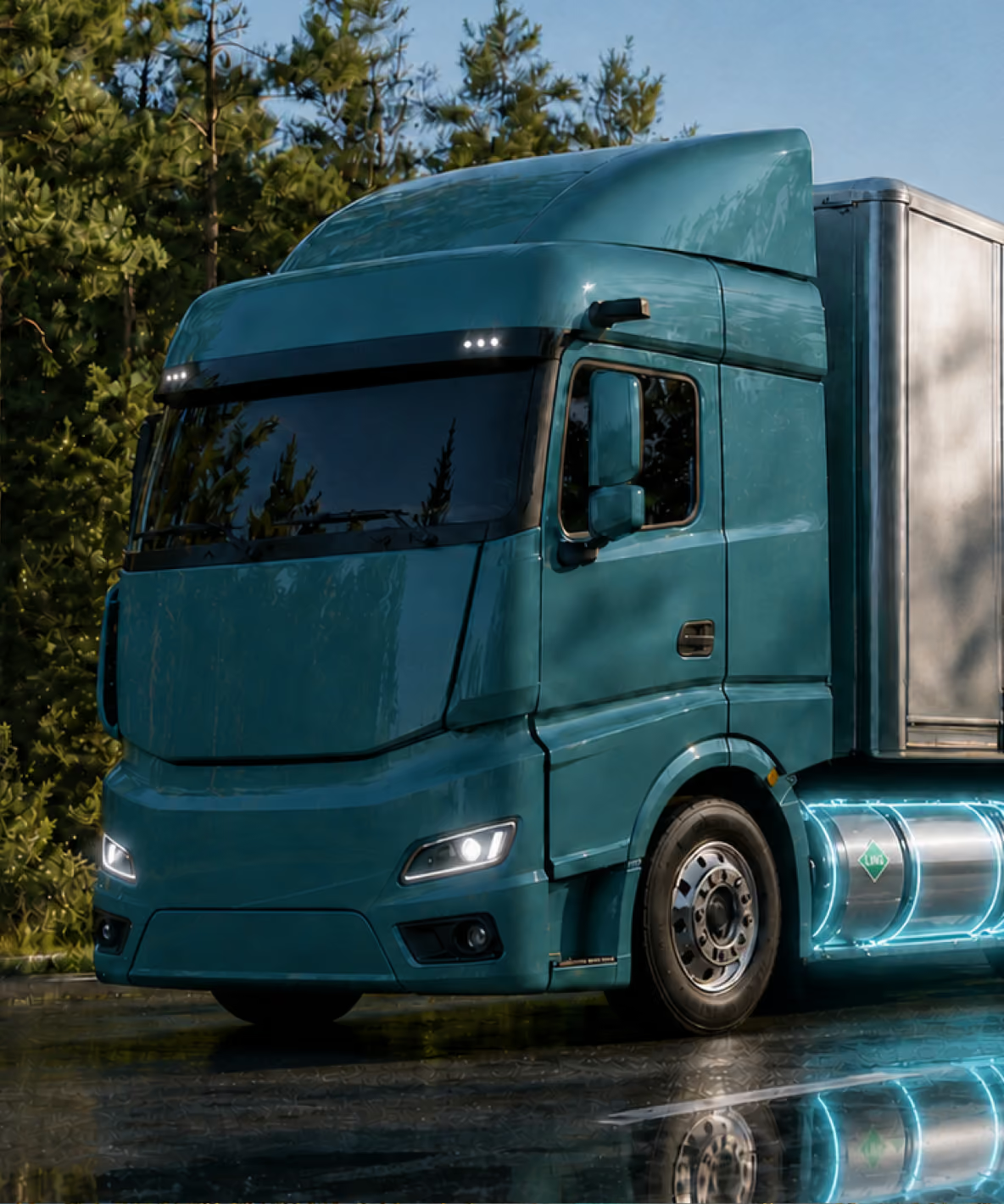
The world generates renewable energy every day. But much of its potential goes to waste.
Manure, food waste, sewage, and other organic materials produce biogas as they decompose. Biogas contains methane, a greenhouse gas with around 80 times the warming impact of CO₂ over 20 years. Controlled digestion captures that biogas before release, allowing it to be upgraded into biomethane and liquefied as bioLNG for heavy-duty transport.
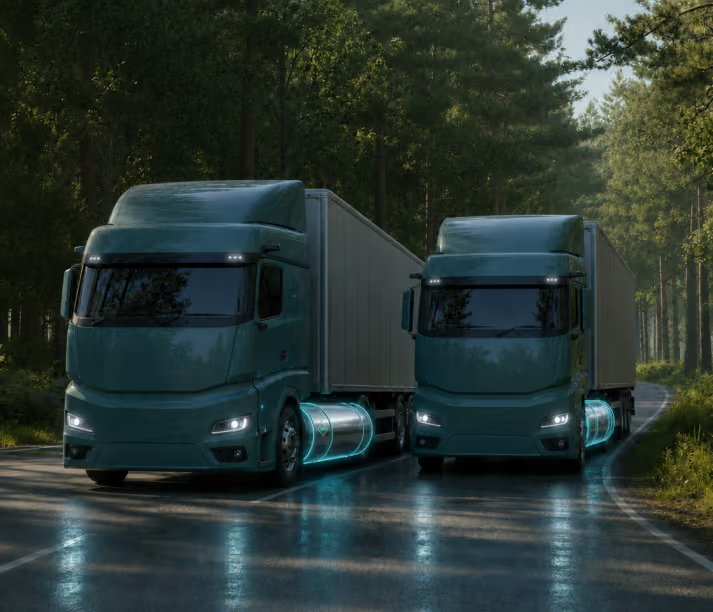
Waste in. Clean fuel out.
Clean, cost-effective mobility





Energy-dense fuel

Emissions reduction.

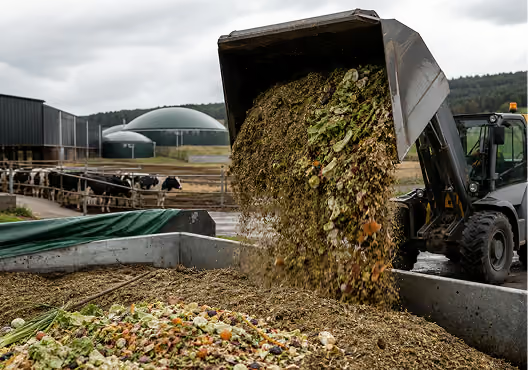
Organic waste
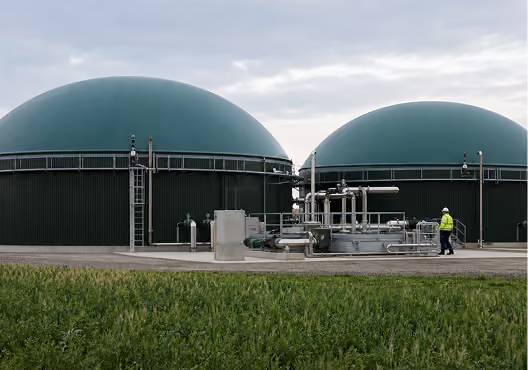
Biogas
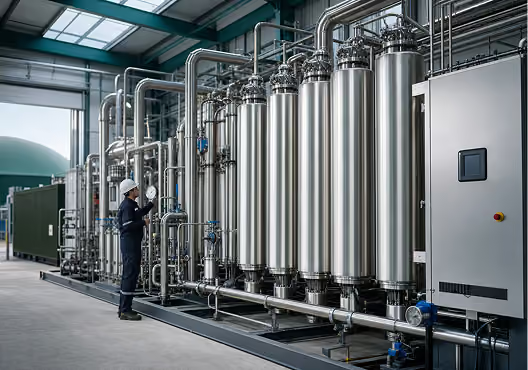
Upgrading → Biomethane
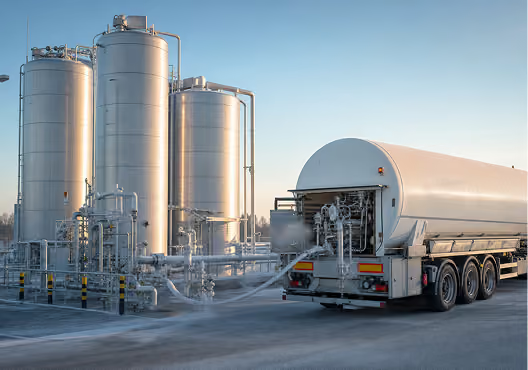
Biomethane → BioLNG
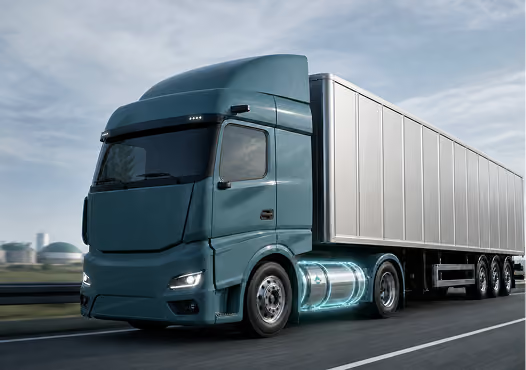
HPDI-powered Truck
Two emissions reductions from one fuel: BioLNG.
Most pathways cut emissions once. BioLNG cuts them twice — at the source and on the road.
Methane captured before it reaches the atmosphere.
Organic waste can release methane, a greenhouse gas around 80 times more powerful than CO₂ over 20 years. Captured and upgraded into biomethane prevents the emission at its origin.
Fossil diesel replaced by BioLNG.
Every HPDI™ truck running on BioLNG displaces fossil diesel. With HVO as the pilot fuel, HPDI enables up to net-zero CO₂.
Decarbonizing heavy-duty with BioLNG takes the whole ecosystem.
Extending BioLNG’s impact requires alignment across vehicle technology, fleet demand, fuel production and distribution, infrastructure investment, and policy.
Policymakers & regulators
EU institutions, national governments, and regional authorities shape policy conditions for HPDI™ and BioLNG investment and adoption through manufacturer CO₂ targets, renewable fuel policy, and how lifecycle emissions reductions are recognized.
European Commission, DG MOVE (Directorate-General for Mobility and Transport), national transport ministries, among others
Technical input to consultations and standards-setting
Gas & biogas associations
These connect fuel producers, distributors, infrastructure, vehicle technology, and policymakers around BioLNG. Shared evidence and coordinated advocacy can build policy support and market confidence for wider adoption in heavy-duty transport.
European Biogas Association (EBA), Eurogas, European Renewable Gas Registry (ERGaR), Gas Infrastructure Europe (GIE), among others
Market intelligence, technology consultation, and standards development
Fuel producers
BioLNG producers need predictable vehicle demand to support investment in production and long-term supply commitments. HPDI™ strengthens the fleet business case for using BioLNG in demanding heavy-duty applications.
Shell, TotalEnergies, Gasum, St1 Biokraft, EnviTec Biogas, among others
Market education to promote demand, route insights, and coordination with OEM
Fuel distributors
Fuel distributors turn BioLNG supply into reliable access for fleets. Concentrated demand, coordinated vehicle deployments, and clear route priorities help them plan volumes, expand coverage, and maintain dependable refueling on key corridors.
Molgas Energy, HAM Group, Rolande, OG Clean Fuels, Gasrec, others
Fleet and market awareness, route insights, and coordination with OEM deployment plans
Infrastructure investors
Infrastructure investment follows credible demand. Defined fleet routes, OEM vehicle programs, and dependable BioLNG supply give investors the volume and utilization evidence needed to fund production, distribution, and refueling capacity.
European Investment Bank, Copenhagen Infrastructure Partners, SWEN Capital Partners, Suma Capital
Route insights, and vehicle technology input for infrastructure planning
Research & verification bodies
Independent research and verification bodies validate operating data, fuel provenance, and lifecycle emissions. Consistent methods help OEMs, fleets, fuel providers, and policymakers assess HPDI performance and BioLNG lifecycle impact accurately.
EU Joint Research Centre (JRC), TNO, VTT Technical Research Centre of Finland, among others
Field data, technical input for independent testing
A dedicated Market Activation team.
Technology alone doesn't move markets. Infrastructure readiness, regulation, and industry alignment do. Our Market Activation team facilitates the commercial conditions that make bioLNG adoption viable for fleets, OEMs, and regulators across every priority region.

Regional market readiness analysis
Industry panels & Expert briefings
Joint market-education campaigns
Direct regulatory engagement
Aligned with the policies shaping the next decade.
HPDI™ connects efficient heavy-duty powertrains with an EU-recognized renewable-fuel pathway. RED III supports bioLNG demand, vehicle CO₂ standards reward efficiency, and corporate reporting increases demand for verifiable freight emissions reductions.